THE iOS LEAD ESSENTIALS PROGRAM
is an online training program for iOS developers who want to become complete senior developers and be one of the most wanted and highest-paid iOS devs in the world.
But don't worry! The next cohort is coming soon. Sign up by email below to be notified:
is an online training program for iOS developers who want to become complete senior developers and be one of the most wanted and highest-paid iOS devs in the world.
Fill knowledge gaps that many developers are still missing to become and be recognized as true and complete senior developers.
Develop better iOS apps faster with the latest technologies and best practices.
Modernize your skillset and legacy projects.
Access to over 60 hours of video lectures, plus all recorded mentoring sessions.
Access to a private community of thousands of developers from all around the world.
Certificate of completion.
Pass interviews with ease and get more opportunities worldwide, including remote and visa sponsorships.
Be more confident as a developer and better estimate and plan your tasks.
Complete the program in 3 to 6 months while still cranking at work.
Individual code challenges reviewed and corrected by senior developers on GitHub.
One-on-one live sessions with senior developers to help you with your own projects.
Access to exclusive job listings.
Senior iOS Engineer & Tech lead
Senior iOS Developer
iOS Engineer
Software Engineer II
iOS Senior Developer
Senior iOS Developer
Senior Software Developer
Senior iOS Engineer
iOS Developer
iOS Engineer
Here are some companies where you can find our students:
The main curriculum is structured into 7 practical modules covering all aspects of developing modern iOS/Swift apps in a progressive and organized way:
The fundamentals of good system design and architecture. You'll learn how to think, design, and draw diagrams like a software architect. The goal is for you to start on the right foot, forming a solid foundation where you can stack the upcoming knowledge. Including:
You'll code following networking best practices and learn how to develop, maintain, and test a clean networking layer in your iOS apps with key frameworks such as URLSession, URLProtocol, Decodable, and third-party code. You'll also learn how to work effectively with backend teams. Including:
You'll code and learn step-by-step how to effectively tackle challenges when it comes to developing, maintaining, and testing a clean persistence layer in your iOS apps using URLCache, CoreData, FileManager, Codable, and other key persistence frameworks. Including:
UI, UX, and Presentation best practices, and how to develop, maintain, and test a clean UI and Presentation layer in your iOS applications. You'll code and learn how to use MVC, MVVM, MVP, and their variants, prototyping techniques, localizing your apps, working effectively with designers, and how to create reusable UI/Presentation components. Including:
Assemble features with reusable, modular components. Learn how to compose modules to form a fully functional app, including app navigation and custom flows. You'll also learn how to validate high-level acceptance criteria with automated tests at every level (Unit, Integration, Snapshot, and UI tests). You'll code following best practices, including how to use the Combine framework and how to develop, maintain, and test-drive a clean Composition layer in your iOS applications.
Tackle complex flows with clarity and confidence. Learn how to develop better apps faster with ready solutions to common challenges such as pagination with caching, navigation, dependency injection, generic and reusable components, performance optimizations, logging, profiling, and modularization in large apps.
Master Swift Concurrency, including:
Sendable, @MainActor, and nonisolated code contexts.DispatchQueue with Mutex from the Synchronization framework to protect shared mutable state safely in synchronous contexts.nonisolated(unsafe).async/await code using withCheckedThrowingContinuation.async during the migration.async/await using concurrency-aware APIs.async versions of existing methods without breaking existing clients.async/await supportCombine-based composition into a full async/await implementation.Scheduler protocol to run concurrent store operations safely.LoaderSpy to test async workflows reliably.Task.yield.async let to run concurrent requests, including how to test it.async APIs.Throughout the program, you'll find a lot of supplementary material. There are over 60 video lectures. Every video lecture comes with subtitles in 21 languages, an accompanying article, source code, diagrams, and references.
You'll learn how to become a complete senior developer following principles and practices such as:
🛠 Learn by Building a Real App — Together
You'll build a complete real-world app using our methodology, from an empty project to deploying it to the App Store.
We also review all your assignments on GitHub and provide you with detailed feedback.
🧭 Choose Your Learning Style
Whether you prefer to learn independently or join a vibrant developer community, we've got you covered:
✅ Option 1: Go Solo
Watch the recorded lessons at your own pace and practice on your own.
✅ Option 2: Go All-In
Join the community, complete real-world challenges, participate in mentoring sessions, attend live events, and get personal guidance.
Caio Zullo
Lead iOS Developer & Program Director
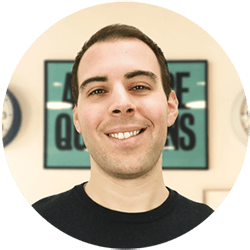
Mike Apostolakis
Lead iOS Developer & Program Director
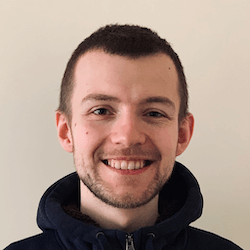
Bogdan Poplauschi
Lead iOS Developer & Instructor
Thiago Penna
Lead iOS Developer & Instructor
Danil Lakhtin
Senior iOS Developer & Instructor
Marko Engelman
Senior iOS Developer & Instructor
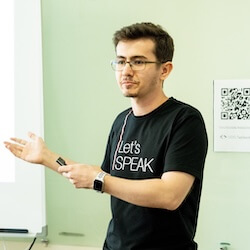
Islom Babaev
Senior iOS Developer & Instructor
Thousands of developers who care about delivering high-quality apps have joined the iOS Lead Essentials program. Every discussion, Q&A, live, and mentoring session is open to the community. So everyone can learn and benefit from every interaction.
+ Over 35,000 developers have joined our waiting list.
The iOS Lead Essentials is an online training program for iOS developers who want to become complete senior developers and be one of the most wanted and highest-paid iOS devs in the world.
Developers who take this program can confidently develop large iOS apps faster and work on big projects worldwide with ease (including remote and visa sponsorships).
Students learn a straightforward step-by-step dev methodology by practicing with experienced senior developers.
The methodology is designed and taught by Caio Zullo and Mike Apostolakis through an online training program organized into a few cohorts of developers a year.
The time required and results of applying this methodology vary depending on the experience of the developers who apply it and the country/city/market they operate in.
For example, dedicated mid/senior iOS developers can achieve results much faster on average.
The iOS Lead Essentials is designed for mid and senior iOS developers who want to become complete senior developers and be part of the highest-paid iOS devs in the world.
The iOS Lead Essentials program is not intended for beginners in software development.
Most of our students have 2 to 10+ years of experience.
We expect students to be professional developers with knowledge of the basics of Swift, iOS development, and Xcode.
We recommend this program for mid and senior developers or developers with at least two years of professional experience who are serious about becoming complete senior iOS developers.
You'll follow a step-by-step methodology with guidance from us and a community of thousands of iOS developers who care about delivering work that matters.
If you have at least two years of professional experience as an iOS developer, you're ready for the iOS Lead Essentials program. We recommend you go straight to the complete iOS Lead Essentials program so you don't waste time with unnecessary preparation.
But if you have less than two years of professional experience, you can start with this free pre-course covering the basics.
By completing this pre-course, you will be ready to complete the iOS Lead Essentials program.
But again, don't waste time. Skip the pre-course if you can and start the iOS Lead Essentials program directly because we cover all the concepts in much more detail in the program.
All lectures have subtitles in 21 languages:
Of course, the iOS Lead Essentials has much more material than what you can find on YouTube.
The videos on YouTube are demonstrations.
The iOS Lead Essentials is a complete mentorship program covering every aspect of delivering solid iOS apps in Swift for you to become a complete senior iOS developer.
We worked really hard on this. We put years of work into the lectures.
And the iOS Lead Essentials program has been updated throughout the years to what we call iOS Lead Essentials 2.0.
The fact is that our team of senior developer instructors and we discovered many ways to improve the program. Things that completely changed the game for our students and us.
And the program is definitely more powerful and interactive than ever before.
For example... The iOS Lead Essentials 2.0 has a team of senior iOS developers, fast interactions and Q&As on our private community, code challenges and reviews from senior developers on GitHub, one-on-one mentoring sessions, plus over 30 hours of extra recorded mentoring sessions (and adding more every week!).
Not to mention that we're also covering new topics such as SwiftUI and Async/Await in the new mentoring sessions.
And that's not all.
There are also things that go beyond the course lectures…
Like the iOS Lead Essentials exclusive live events for students, where you get to meet and interact live with us, our team of senior instructors, and other students. Plus, you can ask us any questions live on Zoom... face to face (on camera!).
On top of all that, you have support from a team of senior developers trained by us and with years of real-world experience in all kinds of challenging projects. You send your questions and receive expert answers from experienced senior developers during the entire year of access you have on the iOS Lead Essentials program.
The program provides a structured curriculum and a step-by-step methodology that makes it the fastest and simplest way to become a complete senior iOS developer.
What you learn in the iOS Lead Essentials program can be applied using any UI framework, including UIKit and SwiftUI.
And, of course, we show both in the program. We show how to apply the concepts with UIKit in the lectures and SwiftUI in mentoring sessions.
If you want to become a complete senior developer, this is the program for you.
The iOS Lead Essentials is a complete advanced program with active support from senior developers, so it could easily be more than $8000 when compared to other courses.
For example, popular bootcamps teaching the mere basics for beginners can cost more than US$8000. So imagine how much they'd charge for an advanced program to become a complete senior developer.
But there are two main reasons why we don't charge more than $8000:
1. Our mission is to help iOS developers achieve their dream of becoming complete senior developers. And keeping this price as low as possible will help more people enroll and achieve this goal.
2. We want to build the biggest community of complete senior iOS developers in the world. By helping more students join our program, we can grow our community and find talented developers to work with us. It's a win-win.
That's why, at the moment, the price to enroll is only:
$8000 US$2497
If you want to become a complete senior developer, take advantage of this special price.
You can also pay in 3/6/12 monthly installment options. (Click here to learn how installments work.)
(And click here to learn how to get this program for free by convincing your boss to invest in the program with you.)
All the payment options, including installment plans, give you exactly the same instant access to the program.
The only difference is that installment plans allow you to split your payment in 3, 6, or 12 monthly installments if you can't pay in a single payment.
It's like buying an iPhone in installments - you pay a fixed amount per month until you complete the full amount.
For example, if you enroll with the 3-month installment plan, you'll pay a fixed amount for 3 consecutive months. And you'll have the same one year of full access to the program as someone who joined with a single payment.
If you join with an installment plan, you can also settle the remaining installments in a full single payment at any moment.
The installments are a great option for people on a budget.
Or for people arranging the funds to enroll, like if you're waiting for approval from your boss. In this case, you can enroll with the 12 monthly installments option to save your seat - and later settle your plan once the funds arrive.
Important: An installment plan is not a subscription, so it cannot be paused or canceled after the 14-day guarantee. After the 14-day guarantee ends, the installment plan must be paid on time until the end - it can only be canceled within the 14-day guarantee period.
We would never want you to be unhappy! If you are unsatisfied with your purchase, contact us in the first 14 days and we will give you a full refund. No questions asked.
Of course, you can ask any question regarding the course lectures and iOS development. We and our team of senior developers will personally reply to you and help you become a complete senior developer. You'll have one year of support from us.
Yes, you'll receive a certificate of completion once you complete the program.
You must complete all lectures and pass all code assignments to receive a certificate of completion.
We review each code assignment on GitHub, line by line, and provide detailed feedback to help you become a complete senior developer.
This is not a program for beginners. Most of our students have 2 to 10+ years of experience.
So if you have at least two years of professional experience in iOS development and you're serious about becoming a complete senior developer, this is the course for you.
The program provides a structured curriculum and a step-by-step methodology that makes it the fastest and simplest way to become a complete senior iOS developer.
Waiting to improve your skills to enroll would be equivalent to waiting to get fit to join the gym!
No, you don't have to be an iOS developer. Students with a background in languages such as Objective-C, C, C++, JAVA, C#, Kotlin, Ruby, and JavaScript have successfully taken the course.
If you know how to code well in another language/platform and you're serious about becoming a complete senior developer, the content is definitely within your reach.
The universal concepts, principles, and practices can be applied to any platform and language.
But again, this program is focused on iOS development with Swift. We don't provide support for other platforms and languages.
Definitely not.
We're constantly updating the program with all new features, including UIKit, SwiftUI, Async/Await, and any other new technology in the future.
And you get access to all free updates for as long as you have access to the program.
The iOS Lead Essentials course is 100% online.
Although we probably won't meet in person, we'll meet in virtual events and the private community inside the program.
You can reach out to us and ask any questions regarding the course and iOS development. You'll have one year of support from us.
The iOS Lead Essentials course is 100% online so that you can progress at your own pace.
The program doesn't have a predefined duration. The duration will depend on how much time you can dedicate to it.
If you dedicate 2h+ a day, you can finish the program in 3 months.
If you dedicate 1-2h a day, you can finish the program in 3-6 months.
If you dedicate less than 1h a day, you can finish the program in 6-12 months.
But there is no rush, and you won't fall behind. You have access to the program for a whole year, which is more than enough to finish the program at least twice and get answers to all your questions.
You have access to the program, updates, and support for a whole year, which means you can repeat the lectures over and over and get answers to all of your questions.
If you dedicate yourself, you can finish the program in 3-6 months.
So one year is more than enough time to finish the program (two to three times even!).
But we know that things can get in the way. So you can later extend your access if you want to.
After running dozens of cohorts, we learned that many students want to renew for another year, mainly for two reasons:
Because we want to personally assist and support all students. And that's a lot of work!
The iOS Lead Essentials program is more than a collection of lectures and articles.
The program is effective because our students also interact with us through discussions, lives, and Q&As.
Therefore, we can only enroll a handful of students at a time.
Every discussion, Q&A, live, and mentoring session is open to the community. So everyone can learn and benefit from every interaction.
Our goal is for no one to be left behind. If you want to become a complete senior iOS developer, this is the course for you.
No. Of course, you need to learn, practice, and apply the methodology first.
The iOS Lead Essentials course is not a magic formula.
We have students that more than doubled their salaries, but those are not typical results. It requires practice and commitment.
And not everyone is willing to do what it takes.
In our experience, some do the work, and some don't. Simple as that.
The program offers a straightforward, step-by-step path with community support and our personal help.
We are 100% committed to helping you, but we can't do the work for you.
That's why we don't recommend the course to people who are just curious or not willing to do the work.
If you're not serious about it, please leave the seat open for another developer.
We totally understand if you don't have time to take the course. Time is extremely scarce, and you need to define your priorities.
However, if you don't find time to invest in yourself, you risk falling far behind people that are working hard to build a bright professional future.
The iOS Lead Essentials program is for motivated professionals that put their future as a priority in their life.
And again, the iOS Lead Essentials is an online program. You can watch the videos at your own pace, at any time of the day, while still cranking at work. You can effectively become a complete senior iOS developer by dedicating less than an hour a day.
No. It's not easy to become a complete senior iOS developer.
If we said that, it would be disrespectful to our students that work hard inside the program.
It's not easy, but with the detailed explanations, step-by-step practice, and continuous support from Caio & Mike and the community, it becomes simple.
We are Caio and Mike, lead developers and mentors to thousands of iOS developers worldwide.
We love building apps and helping other developers thrive. It's part of who we are.
We founded Essential Developer to help iOS developers achieve a prosperous future for themselves, their families, friends, peers, and companies.
Our mission is to help you become a complete senior iOS developer and be part of the most wanted and highest-paid developers in the world.
You matter, and your work matters.
We're building and supporting a community of professional iOS developers who, like us, believe in high-standards, mastery, integrity, and delivering great work.
We want you to succeed.
And we want you to get everything that you worked hard for, so you can advance your career and get yourself and your family a better future.
For any further questions you may have, you can contact us here.